
Credit cards appear to have found favour with public sector banks, which had, so far, been reluctant in expanding their unsecured loan portfolios aggressively.

A senior official of the department said the papers were prepared after serious deliberations, and the I-T department's admission on these measures at this juncture could be significant pointers to achieving the direct tax collection target for 2012-13.

Lenders also allow customers to conduct other businesses from such chambers

If the proposal gets Cabinet clearance, the disinvestment is likely to follow the initial public offering of Rashtriya Ispat Nigam Ltd, for which the prospectus has already been filed with the Securities and Exchange Board of India.

ICICI Bank, the largest private sector lender in the country, is offering an 'instant account number' if you apply for a savings deposit account through its website.

SBI Cards, like most other credit card issuers in the country, suffered losses during the financial crisis of 2008-09 due to sharp increase in delinquencies. The company, a joint venture between State Bank of India and GE Capital, turned profitable in 2010-11. Kadambi Narahari, chief executive officer, shares the strategy to grow the company's cards business in coming years.

Sharp rupee fall, interest differential on export finance rates may have led to arbitrage in gold.

Tax experts said as a result of the amendments, companies operating from countries with which India didn't have DTAAs, would try to shift to countries with which India had such agreements, including Mauritius.

Indian billionaire Shiv Nadar's foray into the insurance sector is likely to fructify soon. DLF Pramerica Life, seeking an Indian partner for its operation, is in talks with Nadar's HCL Group to sell a majority stake. According to those in the know, both parties are back on the table to iron out the nitty-gritty, after the deal got stuck a year back due to stringent guidelines.

The finance ministry is likely to favour an approach that would take into account the payment capabilities of telecom companies while deciding the price and process for spectrum auction this year.

Facing huge redemption pressure on funds raised via foreign currency convertible bonds (FCCBs), India Inc has requested the Reserve Bank of India (RBI) to allow companies to offer higher interest rates on fresh foreign currency loans or bonds, the proceeds of which will be used to pre-pay existing FCCBs.

The appetite for Indian assets is growing among investors from the land of the samurai. An appreciating yen, combined with slow economic growth, has persuaded many Japanese investors to explore opportunities beyond their national boundary, and India appears to be one of their preferences.

Even as the Telecom Regulatory Authority of India is being criticised for the steep reserve price it has set for 2G spectrum auctions in the 1,800 MHz band, the government may be able to garner only Rs 18,000-20,000 crore (Rs 180-200 billion) in 2012-13, just about half the target of Rs 40,000 crore (Rs 400 billion).

ICICI works on similar lines; alternative to Business Correspondents to reach financial inclusion targets.
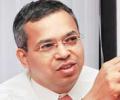
Donald D'Souza, the new head of HDFC Bank's equity capital markets business, prefers to keep himself fit by playing badminton.

The lender's comfortable liquidity position, combined with downward bias in interest rates and slow credit growth expectations in the first three months of this financial year, has allowed it to take this decision.

The deal is stuck because the Reserve Bank of India has declined to transfer the branch licences of RBS to HSBC.

The life insurance arm of the country's largest private-sector lender does it not to expand workforce, but to maintain its strength, as almost a similar number of staffers keeps leaving every month.

To capitalise on the proposed changes in the Budget and the information on black money available with the government, the government is revitalising the economic intelligence council (EIC) headed by finance minister Pranab Mukherjee.

Considering the disvestment mop-up target of Rs 30,000 crore (Rs 300 billion) for financial year 2012-13, the government is thinking of optimising the collection from stake sales in central public sector enterprises (CPSEs).
 © 2025 Rediff.com - Investor Information - Advertise with us - Disclaimer - Privacy Policy - Sitemap - Feedback - About us - Terms of use - Grievances